
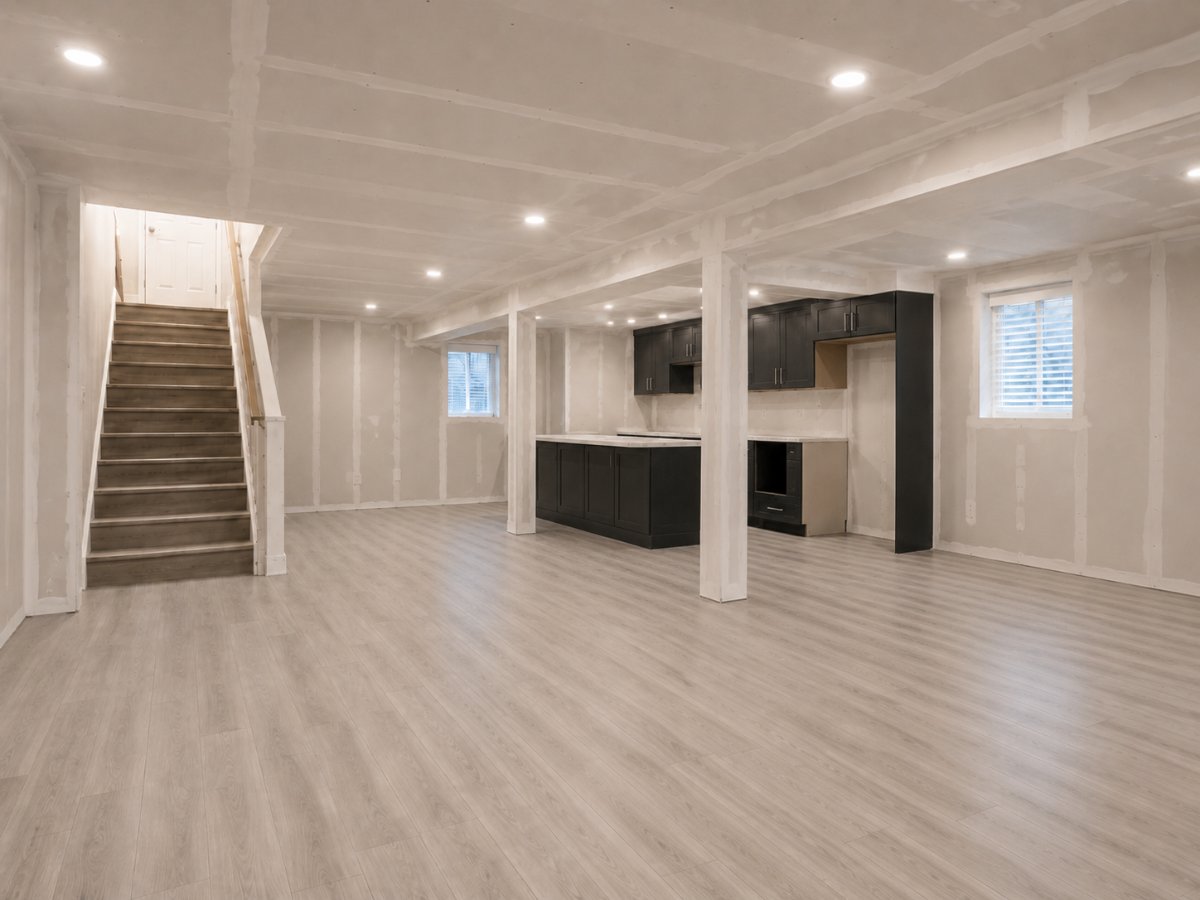
Basement Finishing Permits in Boulder: What Homeowners Need to Know
Plenty of homeowners quietly hope the answer to "do I need a permit?" is no. With basement finishing in the Boulder area, the honest answer is yes — and once you understand why, you'll see the permit process is actually working in your favor. This guide explains who issues your permit, what inspectors look for, and why permitted work protects your investment.
The short answer: Yes — finishing a basement in the Boulder area requires a building permit. It comes from the City of Boulder if your home is inside city limits, or Boulder County if you're in the unincorporated county. Codes and procedures change and vary by jurisdiction, so confirm the current specifics with your local building department before you start — or let your contractor handle it.
Do You Need a Permit to Finish a Basement in Boulder?
Yes. Finishing a basement isn't cosmetic work — it involves framing new walls, electrical, and usually HVAC and sometimes plumbing, all of which trigger permit requirements. Both the City of Boulder and Boulder County explicitly list finishing a basement, along with drywalling and insulating, as work that requires a building permit. The narrow exemptions — painting, papering, tiling, carpeting, cabinets, and countertops — don't come close to covering a real basement finish.
Which Office Issues Your Permit
This is the part that trips people up, so it's worth getting right: the Boulder area is not one single permitting jurisdiction. Where your home physically sits determines which office handles your permit.
- Inside City of Boulder limits — most homes with a Boulder city address — your permit comes from the City of Boulder's Planning & Development Services, which runs the city's building permits and inspections.
- Unincorporated Boulder County — typically mountain and rural properties — your permit comes from Boulder County Community Planning & Permitting and its Building Safety & Inspection Services. The county's building office has jurisdiction only outside the incorporated cities and towns.
- Other towns — Louisville, Lafayette, Superior, Erie, Longmont, and the rest — each run their own building department, and you work with that town directly. The county does not issue their permits (with the lone exception of Jamestown).
One catch worth knowing: a mailing address that says "Boulder, CO" doesn't guarantee your home is inside city limits — some Boulder addresses are actually in unincorporated county. If you're unsure, the county assessor's records will tell you, or a basement contractor who works the area every day will know immediately.
What the Permit Process Checks
The substantive requirements are largely consistent across these jurisdictions, because they all adopt versions of the International Residential Code — Boulder County currently uses the 2021 editions. When your plans are reviewed and your project is inspected, these are the things that matter most for a basement:
- Egress. Any room used for sleeping requires a code-compliant emergency escape opening — for a basement bedroom, that means a properly sized egress window and window well. This is non-negotiable, and a genuine life-safety requirement.
- Ceiling height. Finished, habitable basement space must meet code-set minimum ceiling heights — a real consideration in Boulder's older homes.
- Electrical. Wiring must meet the electrical code edition your jurisdiction currently enforces, checked at rough-in and again at final.
- Smoke and carbon monoxide detectors. Required in the appropriate locations, typically interconnected.
- Light and ventilation. Habitable rooms must meet minimum standards.
- Radon. Colorado's building codes address radon mitigation — important in a high-radon state.
- Fire sprinklers. If your home already has a fire sprinkler system, it generally must be adjusted to match the new finished layout.
- Structural work. Any structural modification requires plans prepared by a Colorado-licensed engineer.
A Few Boulder-Specific Wrinkles
Historic and older homes
Boulder has a large stock of older houses. In the City of Boulder, work involving a structure over 50 years old can trigger historic preservation review, and properties that are landmarked or sit in historic districts face additional review for exterior changes — and digging an exterior egress window well can count as an exterior change.
Adding bedrooms or plumbing in the county
In unincorporated Boulder County, projects that add bedrooms or sanitation facilities can require additional review — particularly for homes on a septic system, where on-site wastewater capacity matters. A basement bedroom or apartment can trigger this.
Doing it yourself
If you intend to do the work personally, jurisdictions require a homeowner authorization — and any electrical or plumbing work must still be performed by state-licensed tradespeople.
How Long It Takes
Permit review takes time — generally a few weeks, depending on the jurisdiction, the season, and how complete your submitted plans are. Once issued, a permit in the Boulder area is valid for 180 days: it expires if work doesn't begin within that window, or if work stalls for 180 days. Expect a sequence of inspections through the project — framing, electrical and plumbing rough-ins, insulation, and a final inspection.
Why Permits Actually Matter — Don't Skip This
It's tempting to view permits as red tape. They're not. Permitted work protects you in concrete ways.
Your square footage only counts if it's legal
An unpermitted finished basement — and especially an unpermitted "bedroom" — may not count as legal living space. That directly affects your home's value and how it can be marketed.
Unpermitted work follows the house
When you sell, unpermitted work becomes a liability the buyer inherits — and buyers, inspectors, and appraisers increasingly catch it. It can derail or discount a sale.
Insurance and safety
If unpermitted work contributes to a fire, flood, or injury, you may find yourself exposed. Egress windows, electrical code, and detectors exist because they save lives.
The Good News
You don't have to navigate any of this yourself. A basement finishing contractor handles the permit applications, prepares the plans, identifies the correct jurisdiction, and schedules every required inspection as a standard part of the project. Done right, the permitting is invisible to you — and your finished basement is legal, safe, and fully on the record.
Let us handle the permits
Permits, plans, and inspections are part of every project we do. Get a free in-home estimate and we'll map out exactly what your basement needs.
(720) 340-2032